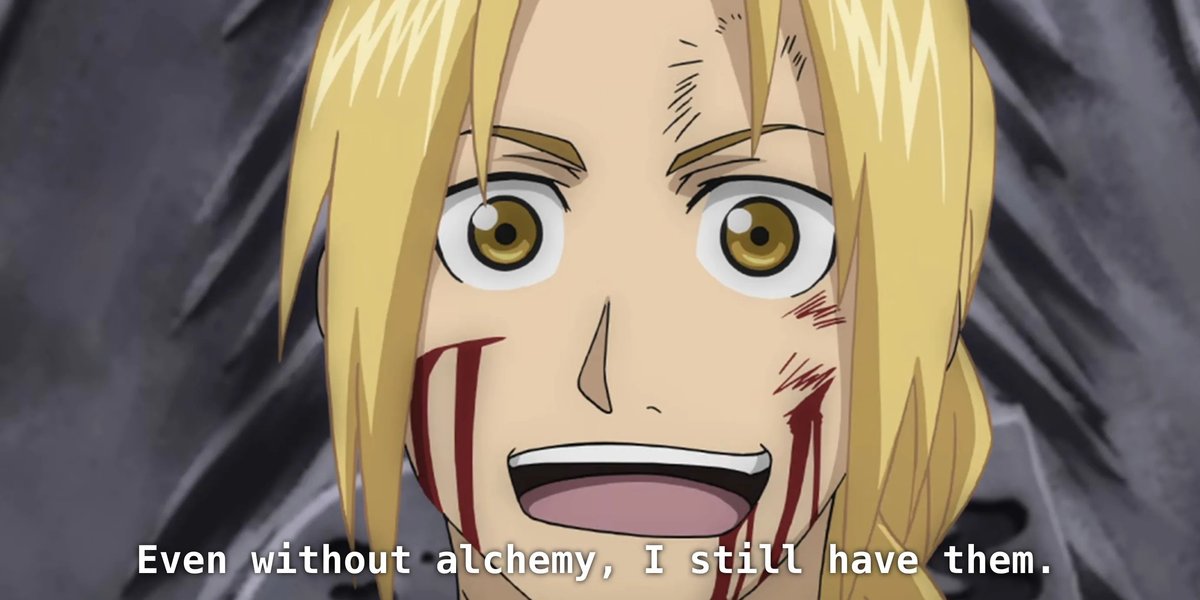
It's a common question for fans of great anime: can characters from different universes ever cross paths? When you're thinking about the likes of Ichigo Kurosaki, the formidable Soul Reaper from Bleach, and the intricate world of Fullmetal Alchemist Brotherhood, it's easy to wonder if such a crossover might exist. However, the straightforward answer is that Ichigo Kurosaki does not appear in Fullmetal Alchemist Brotherhood (FMAB), nor in the original Fullmetal Alchemist (FMA 2003) series or its manga.
These two acclaimed series, Bleach by Tite Kubo and Fullmetal Alchemist by Hiromu Arakawa, exist within completely separate universes. Each has its own unique set of rules, powers, and characters, designed by their respective creators to tell distinct stories. While fan fiction and crossover art are popular, official animated or manga crossovers between Bleach and Fullmetal Alchemist have never occurred. So, while you might wish to see Ichigo's Getsuga Tensho clash with Edward Elric's alchemy, it's a fantastic idea reserved solely for the realm of imagination.
To truly understand the world that Ichigo isn't a part of, let's dive into the rich narrative of Fullmetal Alchemist Brotherhood and its predecessor, exploring the core differences between FMA 2003 and FMAB.
Unpacking the Two Worlds of Fullmetal Alchemist: 2003 vs. Brotherhood
The Fullmetal Alchemist franchise, born from Hiromu Arakawa's brilliant manga, has graced our screens with two distinct anime adaptations. The first, Fullmetal Alchemist (FMA 2003), began its run while the manga was still in progress. This led its storyline to diverge significantly from Arakawa's original narrative midway through the series. In contrast, Fullmetal Alchemist: Brotherhood (FMAB), which premiered in 2009, meticulously adapted the manga's complete storyline, making it the definitive animated experience for newcomers and purists alike.
This fundamental difference in source material shapes everything, from character motivations to the very fate of Amestris. Understanding these disparities is key to appreciating each adaptation on its own merits, and recognizing why neither would ever organically host a character from another universe like Bleach.
The Original Journey: Fullmetal Alchemist (2003) and its Divergent Path
The FMA 2003 anime started strong, faithfully following the manga's arc for its initial half. However, as the production outpaced the manga's release, the series charted its own course, introducing fresh characters, reshaping existing relationships, and redefining core concepts like the Homunculi. In this version, Homunculi are born from failed human transmutations and only achieve human form through the sinister "red stone."
For example, Sloth in FMA 2003 was tragically created from Edward and Alphonse's desperate attempt to resurrect their mother, Trisha Elric. Envy, a key antagonist in this adaptation, was revealed to be a creation of Dante, the anime's primary villain, in her effort to revive her deceased son, who also happened to be Edward's half-brother. It's a poignant, if heartbreaking, reinterpretation that sets it distinctly apart from its manga counterpart. You can explore the diverging narrative of FMA 2003 and its bittersweet resolution for a full breakdown.
The series culminated with a dramatic and somber ending. After Envy fatally wounded Edward, Al selflessly sacrificed himself to bring Ed back. Edward then performed a transmutation to save Al, which unexpectedly catapulted Ed into "our world" (1920s Germany), leaving Al behind in Amestris. The series concluded with both brothers separated, each boarding a train in their respective worlds.
The story of FMA 2003 found its true conclusion in Fullmetal Alchemist the Movie: Conqueror of Shamballa. This cinematic follow-up saw Ed, after two years spent as a rocket scientist in 1920s Germany, embroiled in a conflict with the Thule Society, a Nazi-affiliated organization aiming to open a gate to travel to Shamballa (Amestris's universe). After a series of intense events, Ed ultimately reunited with Al, but controversially chose to remain in our world, believing he had nothing left in his own. Al, in a profound act of solidarity, decided to join him, leaving them both in Germany as World War II loomed. For a deeper look, uncover the true ending to the 2003 series in Conqueror of Shamballa.
The Canonical Epic: Fullmetal Alchemist: Brotherhood (2009) and the Manga's True End
Fullmetal Alchemist: Brotherhood stands as the complete animated adaptation of Hiromu Arakawa's manga, faithfully rendering its intricate plot, including the introduction of characters from the nation of Xing. Here, the overarching antagonist is not Dante, but the ancient and sinister entity known Father.
To discover the sinister origins of Father, FMAB's main antagonist, it's worth noting he began as a simple "Dwarf in the Flask" in the ancient kingdom of Xerxes. He orchestrated a grand transmutation circle, tricking the king into sacrificing the souls of his entire populace, which were then transferred to Hohenheim, his former student. Father subsequently adopted a human appearance and proceeded to create the seven Homunculi, each representing a deadly sin, in his relentless pursuit of godhood and to become a "sinless being." You can learn more about Father's seven Homunculi and their origins, and understand the number and nature of the Homunculi in FMAB.
The core conflict sees the Elric brothers, alongside their military allies, uncover the government's horrifying ties to these Homunculi, whose ultimate goal is to enable Father to achieve true divinity by sacrificing the entire country. Their personal quest to reclaim their original bodies is temporarily set aside for this existential battle.
The climactic showdown with Father sees Edward's automail arm destroyed. In a truly heart-wrenching moment, Al makes the ultimate sacrifice, reversing the human transmutation Edward performed years prior. He offers his own soul to restore Edward's original arm, enabling Ed to deliver the final blow to Father, who is then vanquished at the Gate of Truth. To understand the profound entity known as 'The Truth' in FMAB, it represents the ultimate authority of alchemy, imparting harsh lessons on humility and the inevitable consequences of all actions, especially the pursuit of immense power.
Overcome with grief from Al's sacrifice, Ed performs a human transmutation on himself at the Gate of Truth. Not to bring back a loved one, but to relinquish his ability to use alchemy forever, in exchange for Al's return in his original body. The brothers recover, returning to their hometown of Resembool, where Ed finally confesses his feelings to Winry, cementing a beloved romance.
The manga's final volume also includes a touching bonus chapter, "Another Journey's End," where Al decides to melt down his old armor for repurposing, further highlighting his compassionate nature. To find out what happens after the main story concludes in FMAB, you can check out the post-credit scene analysis.
A Satisfying Conclusion and Lasting Legacy
The reception to the two anime endings varied significantly. The FMA 2003 ending, while emotionally powerful, was often perceived as bittersweet and unsatisfying due to Edward's separation from his loved ones and the unresolved nature of his character arc. In stark contrast, the conclusion of FMAB and the manga was overwhelmingly positive, widely celebrated as "happy" and "satisfying." It provided clear resolution, a heartfelt reunion for its heroes after their arduous journey, and a sense of earned peace. Even though Edward sacrifices his alchemy, his legacy endures, and both brothers are finally able to live full lives with those they cherish. For a complete analysis of whether the FMAB ending truly delivers a happy resolution, and to delve deeper into the satisfying conclusion of Fullmetal Alchemist: Brotherhood, our dedicated guides await.
Ultimately, the reason Ichigo Kurosaki isn't in Fullmetal Alchemist Brotherhood is because the world of alchemy, equivalent exchange, and the battle against Homunculi is a meticulously crafted universe all its own, distinct from the spirit-filled battles of Bleach. Each series offers a unique and compelling experience, best enjoyed within the boundaries their creators painstakingly established.